Showing posts with label Horror. Show all posts

Saturday, 2 November 2013

The Wolf in Man

Here's a belated Halloween entry, about the not outstanding but quite good for what it is Amicus horror film The Beast Must Die (1974), which despite some ropey plotting and unconvincing special effects has a few interesting edges to it.Since werewolves are already covered here it seemed worth a go.


The Beast Must Die is built around the central gimmick that the audience is asked to guess who the werewolf is amongst those gathered at a millionaire's country mansion. The film breaks a quarter of the way through and offers the audience a few moments to weigh up the evidence in each suspect werewolf favour. As such the film can basically be boiled down to an Agatha Christie plot plus werewolf, although the audience participation gimmick is actually pointless thinking it through: the film-makers are asking the audience to do nothing more than they will already be doing anyway.

Calvin Lockhart plays the lead role, a sportsman who has transformed his country mansion into a panopticon, in which himself and his security team can sit at the centre and monitor the activities of his house guests through a bank of CCTV screens. Coincidentally, or perhaps not, The Conversation came out in the same year, suggesting this was the right time for paranoiac surveillance culture to really get going in the public imagination leading on from Watergate. Unusually for a British horror film (or any film of this era and probably since) the hero is black, depicted as arrogant and ruthless but not stupid or malicious, and shown as far more successful (financially, socially, physically) than his white house guests. Newcliffe's wife Caroline (Marlene Clark) is also black and not depicted stereotypically. Influential here perhaps are the possibilities of casting American lead actors for distribution in the USA, and the influence of blaxploitation that partially encouraged the casting of black actors in well-rounded and non-stereotyped roles (again concerns here were more likely financial than egalitarian, the marketing of films based on the breakdown of 'the audience' into analysable demographics). In much of the promotional material however Peter Cushing is emphasised over Lockhart, again possibly not dubious as placing Cushing on a horror movie poster is smart money, but still. Although the tension between Newcliffe and his houseguests is never expressed verbally as racial in nature, the possibility is there, a sense of resentment at Newcliffe's success compounded with racism.

From a different angle however, The Beast Must Die is maybe perceptive in that in order to accommodate to the ruling capitalist class traits such as race can be de-emphasised when presenting the right attitude and accoutrements. To do the things you must do you don't need to be anybody in particular. Here the image of Newcliffe, sitting behind his screens monitoring life in the enclosed world of the mansion, drifts towards the horror-film reality of shoot-to-kill lists and air-conditioned huts in the Arabia Peninsula. Newcliffe is prepared to kill anyone of the depersonalised figures who walk across the camera's field of vision, to track and kill them in the most productive sense possible; the image marries up well with Harry Lime's declaration about the ease of bumping off the black dots far below, although as the army can tell you the dots can be even closer than that and still be easy to take out with a button push of the controller. Newcliffe does not even spend most of his time watching the screens, subcontracting to a team of hired surveillance experts who keep watch from their hidden room at the top of the house while below Newcliffe entertains his guests.

The plot of the film is essentially fluff. The guests wander around the house, there are a few interesting character details, some appearances from a deeply unconvincing werewolf (in some scenes it is literally a big dog wandering onto set), and there are some words of wisdom from Cushing about the rule of werewolves and silver that doesn't stay quite consistent through the film. Not to spoil the reveal, the film ends with Newcliffe deciding to commit suicide after being infected from a werewolf bite. Here some of the racialised resentment perhaps becomes more apparent as Newcliffe is made to die for the folly of his success. In order to win, Newcliffe has had to destroy his entire life, not just himself but what he has worked for and what he has held dear. 


Wednesday, 25 January 2012

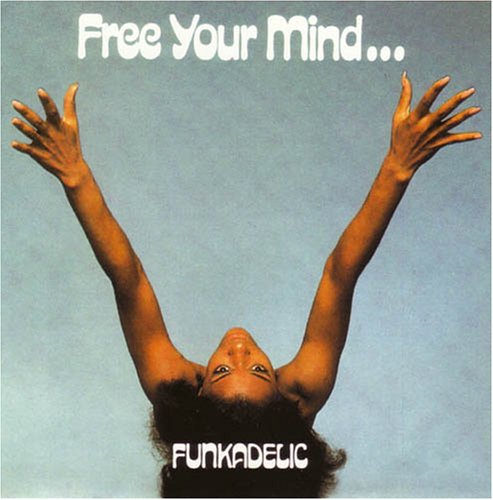
Free Your Mind... and Your Ass Will Follow. Funkadelic.


“My Cadillac and My Pinkie Ring: a Diagnoses of The Rapture of Objects in The Form of a Funkadelic Review By Ralph Dorey on Friday 13th of January 2012 in Holloway”


The Funk is physical, of this we can have no doubt. We hold this truth to be self evident, as to say “beyond representation”. The Kingdom of Heaven is Within. We need only look at the Funk to encounter its corporeal being, it requires trust and not the writing of a church.

Side One: Cock Block

“what time is this?” – George Clinton

Let us look at the body of Funk as wheeled in on the gurney. Dead on arrival but twitching (because to be truly physical, to loose one’s head and become animal, one must also become meat. To free one’s mind one must loose one’s head. The Funk is a corpse of transcendence, if the soul were to move not up to heaven but down to the crotch, down to the earth and death sex of soil-systems). The title track opens this monster, opens with the dying rays of Hendrix’s unification of church and state through the banner of stars and delivers a survey of land flattened (Holy Compression), describing space through the pan from left and right and left and right. Upon the flat landscape Funkadelic build a pyramid from a thousand parts. Thousands of pieces, thousands of instances, but only a handful of types, the [it ain’t a stab it’s a slab] of bass, organ and drum chopped tight with the (all men are) equaliser and staccato like a brick or a bar of pig lead. The funk is a flat square, existing only in two dimensions. Tight. Distortion is the sound of restraint, the head against the ceiling just as Funk is the music of repression, the repression of the self, of the head, just the body in the world (buried alive). A wriggle against the belt, the hand against the mountain, the impossibility of breaching the bounds made into a sublime act like an abstract fuck. Over and over and always now on the Plateau. Like a piston, Up For The Down Stroke.

There is no time in this song, no progression. A short while later Public Enemy would push this architecture beyond its last grasp at spacial orthodoxy. The Bomb Squad build samples like sedimentary rock free from human intervention and transcription. All time and space is now and in every moment, understanding that both history and architecture are perfected in the formation of coal (the black planet). Layers and layers pile down on now, hit all the buttons and hit record and repeat till the full black stratified mass fills all space and time. My Uzi weighs a ton.

Side Two: Science Fiction

“head ache in my heart, heart ache in my head” – Eddie Hazel

The doctor leans over us, the dead and headless and strokes us with his words of comfort and the placebo of muzak. Drifting off we find we’re in the yard behind the church and down by the riverside. Sitting and leaning against a washed out marker. Shoulders to the stone we remark at how its shape now matches that of our torso and likewise the empty space above mirrors the absence of our own skull. The gravestone is too short though, to keep our back flat to it we should sit lower, out seat touching the submerged root of flat stone which carries down beneath the surface and supports the vertical weight above. Reaching up the doctor pulls on the hanging branches of Willow and Yew. The church tree and the river tree, the painkiller and the heart medicine. 

Post-op: Freed of legs and stump-sunk to the belt we awake. Spine aligned to the stone and groin in the soil. A nothing above the nothing below and a horizon in between with a torso plugging the sky to the earth. Nearby the Willow sways a million repeated arcs of whale finger bones over the water like the infinite delay of the echo box through which pumps the snare. Repetition is to have one time at all times stacked up. The Yew just bends, denying the stability of form with a stretch while it in turn is denied the release of a break by layers of compression.

“from every head and ass” – George Clinton


Cross posted on The Institute for Spectralogical Audio Research

Friday, 21 October 2011

Dis-possessed


"When I first saw [The Exorcist] I was pissed off because I saw it as a return to the ancient views about the Devil and the Catholic Church: part of the nostalgic disease of the 1970s, and a reactionary one at that. When I saw it a second time it was with a San Francisco clinical psychologist...who immediately saw the movie as an allegory. And that enlightened me. People flock to the movie because it is a therapeutic experience. We are all possessed -- by our addictions, our loves, our attachments, our habits, our unconscious, our guilts, our needs, our possessions, our social roles -- and they talk through us. We vomit out our bullshit. We all want to be exorcised."
-- Jerry Rubin, "I am Regan, you are Regan,"
Village Voice, May 2, 1974

"...We weren't so much the Lords of Darkness as the Lords of Chickenshit when it came to that kind of thing. I remember when we went to see The Exorcist that Christmas in Philadelphia: we were so freaked out, we had to go watch The Sting afterwards to take our minds off it. Even then, we all ended up sleeping in the same hotel room, because we were scared out of our minds. It's funny, because years later Linda Blair -- who played the satanic kid in that movie -- ended up dating my mate Glenn Hughes from Deep Purple. She definitely liked musicians, it turned out. She even went out with Ted Nugent once. But she wouldn't go near me.
Not a fucking chance."
-- Ozzy Osbourne, I Am Ozzy

"They just wouldn't fuck off, those satanists. I'd walk out of my hotel room in the morning, and they'd be right outside my door, sitting in a circle on the carpet, all dressed in black hooded capes, surrounded by candles. Eventually I couldn't take it anymore. So one morning, instead of brushing past them as I usually did, I went up to them, sat down, took a deep breath, blew out their candles, and sang 'Happy Birthday.'
They weren't too fucking happy about that, believe me."
-- Ibid.

Tuesday, 23 August 2011

New Maps of Purgatory

Since Phil's Carl's yet to pipe up with his unpacking of Zardoz, I thought I'd kill off a few lower-tier candidates in the meantime. So here's a random selection, in no particular order...


Logan's Run (1976)

We've seen the future and it's a shopping mall in Fort Worth, Texas. And yeah yeah -- it's better to burn up than to fade away. Effectively what we have here is the previous decade's generational war slogan of "Never trust anyone over thirty" extrapolated in to an extreme, resulting in the dystopic dénouement of the premise for Wild in the Streets.

Yet how humbling, how Romantically fatalistic -- in this, the year of the American bicentennial -- to see the nation's capitol as ruins, strewn with vines and all sorts of flora, patinaed by the elements to which they've returned. And Sir Peter Ustinov's wrinkles are a marvel to behold and to touch; the very embodiment of nature itself, if not of the authority and experience so thoughtlessly discarded by the cult of youth.

But nevermind the ageism angle, because Richard Pryor has the last word: "Looks like white people aren't counting on us being around."


Rollerball (1975)

The excesses of empire, sans vomitoriums. Key concept: Blood sport.


Westworld (1973)

The excesses of empire, alternate take. One of the advantages of this empire being that -- artificially, and merely for the sake of leisure -- one can colonize the past. Key concept: Hostile objects.


Phase IV (1974)

Effectively this borrows a premise that was put forth some years earlier in 2001: A Space Odyssey, that the human race is overdue to make an developmental leap, and that it need help from an outside party -- of extraterrestrial origin -- in order to take that next step in its evolution. And as in 2001, it puts that thesis across in a confusingly oblique way.

Exactly what the nature of this impasse might be, who can tell? But noted that the mathematician believes that everything can be quantified in numbers, and the ants -- in their own way -- prove him correct by demonstrating the power of collectivity. But don't look to a movie that pilfers much of its "action" from a nature documentary for any sort of clarity or coherence.


Silent Running (1972)

In which Deep Ecology meets deep space. With all plant life on earth being choked off by (we're to assume) pollution, Freeman Lowell would sooner kill a man than a tree. This of course is bound to stretch the borders of pathos for most viewers, as much as the plot stretches those of scientific plausibility. For starters: The spaceship survives a passage through the rings of Saturn with all but the most minor of damage. Which is ridiculous enough to start with, exponentially moreso when you note that the spacecraft bears the American Airlines logo.


Day of the Dolphin (1973)

Directed by Mike Nichols, directly following the warm press he'd received for Catch 22 and Carnal Knowledge. The only interesting thing is about this film is that Nichols took the project after (reputedly) Roman Polanski was slated to helm the project. But Polanski, who was dealing with the aftermath of Sharon Tate and his unborn child's murder at the hands of the Manson clan, decided that making a screen adaptation of Macbeth was more suited to his mood at the time. Discuss.


The Exorcist II: The Heretic (1977)

With which the director, having missed out on a pile by turning down the first film in order to make Zardoz, doubles back and tries to recoup his losses by agreeing to tackle the sequel.

Should we be surprised to learn that the forces of the Prince of Darkness directly link back to the heathen hordes of the "Dark Continent"? Or should we be more surprised that, in a supposedly more enlightened age, such a plot twist was expected to go uncontested?

No matter. The result was universally ranked as one of the decade's worst films. Still, between its gloriously unenlightened post-colonial confusion, its jumble of popular paranormal phenomena, and its bizarre efforts at glamorizing its pubescent female lead, it's also one of decade's most perversely & hilariously enjoyable movies.

Sunday, 17 April 2011

Je Suis Le Grande Zombie


A riot is the language of the unheard.
- Martin Luther King


Must be the devil must be the devil mus is mus is mus is
mus is be the devil, 
cain be Rockefeller

 caint be him, no lawd
aint be Dupont, no lawd, cain be, no lawd
- Amiri Baraka 'Dope'


Top Ten Lessons For Surviving a Zombie Attack
1. Organize before they rise!

Max Brooks Zombie Survival Guide: Complete Protection From The Living Dead


I always thought of the zombies as being about revolution, one generation consuming the next.
- George A. Romero

Sunday, 7 November 2010

Rolling Thunder

The Vietnam War, like the Iraq and Afghanistan wars in our own era, is often mistaken for being an imperialist war. However, historically, true imperialist wars tend to be won quickly by the ruthless, dedicated imperialists, instead of resulting in interminable, humiliating defeats. What wars like Vietnam actually are is intellectual wars, in that their ultimate rationale derives from theories generated by small cabals of intellectuals in politically-motivated think-tanks, that are themselves dedicated to the maintenance and furtherance of the works of earlier politico-economic philosophers or philosophical schools.

These theories, usually derived from misdiagnosed, exaggerated or even invented threats, are packaged into narratives that derive plausibility by working backwards from the perceived "vulnerabilities" that are usually generated from status anxieties ("they hate our way of life") and are presented to politicians through avenues of influence previously established by corporate or military-industrial bodies that in turn stand to derive secondary benefit from any resulting conflict. Finally they are sold to the public in a series of soundbites ("The Domino Theory", "The Axis Of Evil", "The War On Terror" etc.) that turn what were originally obscure and/or marginal theories into self-evident Manichean inevitabilities.

In world history (as opposed to Western history) this kind of behaviour is a reliable indicator of civilisational decline, as it marks the moment where a society has reached a stage of wealth and comfort where it is unwilling to recognise or act on the principle that war, or any other sustained effort, requires sacrifice. The society therefore adopts the magical axiom that sacrifice can be replaced by intellect, as enacted in finessed strategy and/or technology. Only a nation in the intellectual stage in which belief in the efficacy of brainpower and technology is paramount could contemplate involvement in such wars, and indeed one of the principle self-deceptions involved in them is the belief that the enemy can quickly be overcome with either shock-and-awe firepower (technology), or by inserting small numbers of troops in advisory or policing roles to advance the cause of native allies (brainpower). In short, every effort is made to create and sustain the illusion that no serious sacrifice will be necessary.


"Rolling Thunder" was the name given to the United States’ air offensive against North Vietnam that commenced in 1965, and rolled along under various appellations ("Menu", "Linebacker", "Linebacker II") until 1972. From the start, the policy contained a striking contradiction in that though it was magically believed that sustained aerial bombing of infrastructure would persuade the North Vietnamese to capitulate, it was also considered that certain infrastructural facilities and defensive systems (primarily airfields) should be excluded from targeting for humanitarian or diplomatic reasons. This had two notable results. The first was that American bomber pilots had to fly to their targets at low-level and in clear conditions to accurately hit their targets, making themselves vulnerable to the Vietnamese defences. The second was that the policy clearly set itself up for expansion and compromise on the event that it’s initial targetting conventions failed to gain results.

Within a year of the beginning of "Rolling Thunder", the North Vietnamese had started to collect large numbers of downed American pilots, and this presented them with an opportunity for a propaganda coup, which they initiated by inviting the world’s media to Ho Chi Minh City, nominally to confirm that their prisoners were being well-treated, but with the real motive of re-framing the conflict in sympathy with their viewpoint.

What amazed (and even to some extent appalled) Western journalists was the enormous confidence the North Vietnamese had in their eventual victory. At first this was suspected of being some kind of bluff, but as the sheer ebullience of their hosts persisted, through every rank of official they came across, for the entire duration of their time in the capital, the realisation dawned that the Communists meant it. They really expected to win. And the basis for their confidence was simple - they knew that they were prepared to sacrifice more, to endure more, than the Americans and their allies.

The U.S. could never match the levels of sacrifice of their enemies, even though they had committed themselves far more than they had originally intended. The only way they could escalate their effort was through moral compromise; firstly by loosening their definition of what constituted an acceptable target (by taking in civilian areas), then by increasing the amount of ordnance dropped (by engaging heavy B-52 bombers) and finally by secretly breaking international law (by bombing neighbouring Cambodia). Even today, footage of the destruction wreaked by the American bombing of the Indochinese countryside provokes a kind of hypnotic awe. Like Hollywood, the United States military had become addicted to pointless pyrotechnics.

The lesson, which still hasn’t been learned, and perhaps for many deeply embedded cultural reasons, cannot be learned by Westerners, is that technology has the potential to be utterly degrading, in that it offers both diversions from, and false solutions to, problems that require true personal sacrifice to overcome. The cycle of identifying a problem, attempting to utilise an intellectual or technological method to overcome it, failing, and then blaming oneself is, I suspect, perhaps the underlying source of the terrible levels of depression that underpin technologically advanced societies. Perversely, every failure of technology only increases the almost mystical belief that modern society has in it, to the point where people even expect to be raptured away in Singularity with it.

Nevertheless, somewhere far up a river, deep in the Vietnamese jungle, one United States Army officer truly understood the latent power of self-sacrifice and the Human Will. A heretic to contemporary Western principles, he himself had to be exterminated.

Thursday, 28 October 2010

Charlie Don't Surf


Note: Dennis Wilson and Terry Melcher (actual son of Doris Day and executive producer of her TV show) were the friends and 'intended' victims of the Manson family, for petty showbiz reasons - not 'race war', helter skelter or any other hippie/punk/industrial rock bullshit.

Wednesday, 27 October 2010

Man's Best Friend: Straight on Till Morning (1972)

Straight on Till Morning (1972) is amusingly described here as 'like Ken Loach directing poor cow on LSD'; in fact it was the work of Peter Collinson, director of now ubiquitous 'Brit' film of the 60s The Italian Job (1969). If this was equally feted as a film of the 70s then we'd recognise something of the psychic/social extremity of that period. Spoilers obviously follow...

Rita Tushingham (Brenda) escapes from a spectacularly miserable looking Liverpool to a hardly much more thrilling 'swinging' London, claiming to her mother she's pregnant and going to find the father. Once there she sets out to find a man to make her pregnant, to give truth to her lie, deciding on James Bolam (not the most prepossessing swinging guy), but he, unfortunately, sleeps with her London 'best friend'.

Structured by bizzare editing the film opens and as truly disorientating, if not to say distressing, 'image' of 70s London/Britain. This is even before Tushingham, in scenes of painful awkwardness that perhaps belie Adam Kotsko's theory of the recency of this structural trait, meets her fatal partner - truly post-Norman Bates pretty boy psychokiller 'Peter' (played by Shane Briant).
Entering into a foile a deux, structured by Peter Pan, from which the film takes its title, they settle down in the mews house of the sugar mummy 'Peter' has previously murdered. He has one of those psychopathologies hopefully not present outside cinema (equal parts Norman Bates and Mark Lewis (Peeping Tom)) - murdering his surrogate 'mothers' and anyone he finds 'pretty' with that archetypal British weapon the Stanley Knife.
We see the depth of his pathology when he murders the dog 'Tinker' because Brenda as 'prettified' the poor creature to entice Peter. Settling into 'domestic bliss' (Peter regards women as there to cook and clean), eventually Brenda (now renamed 'Wendy') becomes pregnant. As she seems to have disappeared she is tracked down by her London best friend on behalf of her distraught mother. Unfortunately said friend meets up with Peter and, after sex, he murders her for being 'pretty'.
The most extreme and distressing moment is, unusually aural. Outside of the squelchy 'shunting' in Society, David Lynch's sountrack for Eraserhead, or the slaughtered pigs of The Exorcist, it contains one of the most horrifying sound sequences in cinema.

Peter likes recording his murders (parallel to Mark Lews's filming) and to prove his true nature to Wendy he locks her in the bedroom with a tape playing the sounds of his killing of the dog and the best friend. The sounds of the killing of the dog are truly horrible - obviously we're dealing with fiction, but there's something about the slow and painful killing of the dog that exceeds the sounds of the murder of the friend. I don't know how they got these sounds recorded and I don't want to know.
After escaping from the bedroom and trying to escape by Peter the pregnant Brenda/Wendy is presumably murdered by Peter (this takes place off camera). If we think of the literally suspensive ending of The Italian Job I doubt we could imagine a grimmer counterpart of the undecidable ending.

Of course the film inhabits the misogyny discussed previously here, in almost a parodic way, considering the general unpleasantness of the male characters and Peter's camply 'performative' masculinity (mixing in homophobia as well - it seems appropriate Shane Briant would later play Dorian Gray). On the other hand, the female characters are generally supportive, Brenda's mother is genuinely concerned for her and seems more confused by her daughter's fantasy life and disappearance. The best friend she meets in London may sleep with Wendy's prospective boyfriend and Peter, but she goes to find her and seem socially/sexually liberated, but not condescending or hostile to Brenda.
Therefore, we don't have 'anti-Oedipal' outsiders versus both straights and the newly-liberated hippies/hip, but rather hyper-Oedipal violent inversion. The fantasies of return to childhood are given a far darker edge than anything Denis Potter imagined, and the brutality, in the most banal 'British' way, captures a 'nihilism' that has nothing glamorous or punk about it.

It's the refusal of a 'social' or even 'psychological' explanation for this extreme but banal violence, beyond the usual post-Freudian cliches, that makes the film so misanthropic. A true product of the 70s, a film without hope.

Tuesday, 26 October 2010

Vampire Blues

I need to do a long post on The Stranglers - in my opinion the greatest band of their era, and yet still to this day subject to a mysterious cultural omerta. In the meantime here's a track from Hugh Cornwell's inexplicable 1979 album "Nosferatu".


It's unclear why Cornwell felt the need to make a solo album at this time. One would have suspected that having freed himself from the seismic reaming machine that was The Stranglers' rhythm section he would have indulged his craftsmanlike songwritery side, but instead "Nosferatu" is an experimental, fragmentary hall-of-mirrors, fathomable only by its creator.

Perhaps a clue as to its purpose is given by the fact that The Stranglers had already used the smack-as-vampire meme in "Peasant In The Big Shitty". When injecting (no doubt adulterated) magical powders into your body, it's inevitable that you'll be injecting a certain amount of psychic filth with them. "Nosferatu" is Cornwell giving the larvae at the bottom of his psyche something else to feed on. It's a diseased record.

Friday, 22 October 2010

Oliver's Army


Stomach head and genitals
Choked until unconscious
Cold water poured in the ears
Plastic bag held over head
Thrown against the walls
Then they were thrown against the wall
Then they were hit with karate chops
Beaten in the face
Bending of the wrists
Lifted up by the ears
Burnt with cigarettes
And teeth knocked out
Then they were spread-eagled on the floor
And then jumped upon

- The Pop Group 'Amnesty Report on British Army Torture in Northern Ireland'