Showing posts with label Sex. Show all posts

Wednesday, 25 January 2012

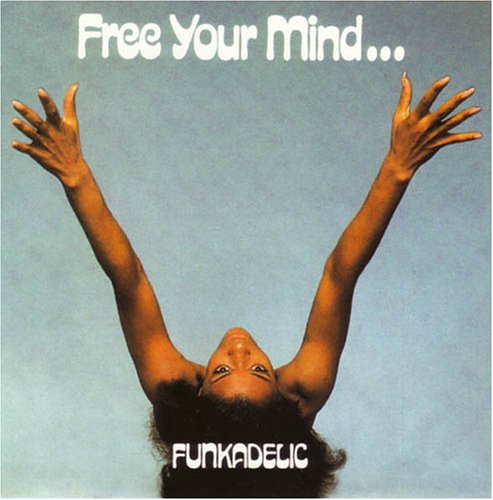
Free Your Mind... and Your Ass Will Follow. Funkadelic.


“My Cadillac and My Pinkie Ring: a Diagnoses of The Rapture of Objects in The Form of a Funkadelic Review By Ralph Dorey on Friday 13th of January 2012 in Holloway”


The Funk is physical, of this we can have no doubt. We hold this truth to be self evident, as to say “beyond representation”. The Kingdom of Heaven is Within. We need only look at the Funk to encounter its corporeal being, it requires trust and not the writing of a church.

Side One: Cock Block

“what time is this?” – George Clinton

Let us look at the body of Funk as wheeled in on the gurney. Dead on arrival but twitching (because to be truly physical, to loose one’s head and become animal, one must also become meat. To free one’s mind one must loose one’s head. The Funk is a corpse of transcendence, if the soul were to move not up to heaven but down to the crotch, down to the earth and death sex of soil-systems). The title track opens this monster, opens with the dying rays of Hendrix’s unification of church and state through the banner of stars and delivers a survey of land flattened (Holy Compression), describing space through the pan from left and right and left and right. Upon the flat landscape Funkadelic build a pyramid from a thousand parts. Thousands of pieces, thousands of instances, but only a handful of types, the [it ain’t a stab it’s a slab] of bass, organ and drum chopped tight with the (all men are) equaliser and staccato like a brick or a bar of pig lead. The funk is a flat square, existing only in two dimensions. Tight. Distortion is the sound of restraint, the head against the ceiling just as Funk is the music of repression, the repression of the self, of the head, just the body in the world (buried alive). A wriggle against the belt, the hand against the mountain, the impossibility of breaching the bounds made into a sublime act like an abstract fuck. Over and over and always now on the Plateau. Like a piston, Up For The Down Stroke.

There is no time in this song, no progression. A short while later Public Enemy would push this architecture beyond its last grasp at spacial orthodoxy. The Bomb Squad build samples like sedimentary rock free from human intervention and transcription. All time and space is now and in every moment, understanding that both history and architecture are perfected in the formation of coal (the black planet). Layers and layers pile down on now, hit all the buttons and hit record and repeat till the full black stratified mass fills all space and time. My Uzi weighs a ton.

Side Two: Science Fiction

“head ache in my heart, heart ache in my head” – Eddie Hazel

The doctor leans over us, the dead and headless and strokes us with his words of comfort and the placebo of muzak. Drifting off we find we’re in the yard behind the church and down by the riverside. Sitting and leaning against a washed out marker. Shoulders to the stone we remark at how its shape now matches that of our torso and likewise the empty space above mirrors the absence of our own skull. The gravestone is too short though, to keep our back flat to it we should sit lower, out seat touching the submerged root of flat stone which carries down beneath the surface and supports the vertical weight above. Reaching up the doctor pulls on the hanging branches of Willow and Yew. The church tree and the river tree, the painkiller and the heart medicine. 

Post-op: Freed of legs and stump-sunk to the belt we awake. Spine aligned to the stone and groin in the soil. A nothing above the nothing below and a horizon in between with a torso plugging the sky to the earth. Nearby the Willow sways a million repeated arcs of whale finger bones over the water like the infinite delay of the echo box through which pumps the snare. Repetition is to have one time at all times stacked up. The Yew just bends, denying the stability of form with a stretch while it in turn is denied the release of a break by layers of compression.

“from every head and ass” – George Clinton


Cross posted on The Institute for Spectralogical Audio Research

Tuesday, 26 April 2011

I’m About To Lose Control…..


On the one hand, much of the music of the American New Wave of the late 1970’s was an attempt to infuse rock music with a mythic-poetic quality, a contemporary equivalent to the Symbolism of the 19th Century, in which the artist’s life was lived through their work to the extent that their very being became itself a lived poem, and in turn took on the quality of legend. Even your very name could be the subject of artistic transmutation.

On the other hand, you had The Knack. Formed in Los Angeles in 1978, the band were one of the most fascinating and controversial groups of the late Seventies. Like so much of the cultural output of the era, their work was equally capable of repulsing both conservatives and liberals, with its seemingly relentless fixation with the minutiae of incipient sexual intercourse.


In many ways, The Knack’s songs are some of the most compelling ever recorded, at their best working themselves up into a tumescent lather, as they flip back and forth through the attraction/repulsion dynamic of those first trepidatious fumblings of adolescent sexual discovery. Forever the nerd, singer Doug Fieger’s lyrics stammer like a schizoid masterbatory monologue as he runs through the potential fleshy joys and painful rejections to be encountered as he lasciviously circles his target.


With his toad sweat covered brow, glove-puppet eyes and flaring Kenneth Williams nostrils, Fieger would be unbearable were it not for the fact that The Knack were one of the most compulsive riff-machines of the era. Pinned down by the clinical drumming of Bruce Gary, the band’s timing is immaculate, opening and filling space with some of the tightest, sparest playing conceivable. It’s one of the paradoxes of The Knack that though their whole oeuvre encompassed the subject of frustration and denial, their music was supremely satisfying, its surplus libido tickling the listener with endless stutters and tics. Even their solos are punctually pleasing, being lyrical and expressive, but never lasting a note longer than they should do.


That said, there was always something faintly obscene about The Knack, and America’s moral majority, with its impeccable flair for uncovering the decadent, was soon on the trail. The Knack were literally persecuted. Initially this merely concerned their alleged over-similarity to The Beatles (eh?), but when it began to be noted that the band were considerably older than the teenage girls they lyrically pursued, a full-blown "Knuke The Knack" campaign followed in earnest.

Riven by internal tensions of their own, after two great albums the band recorded the apologetic "Round Trip" in 1981 and disbanded. Inexcusably brilliant, it goes without saying that we shall never see their like again.

Friday, 8 April 2011

An Endless Almanac Of Terrifying Wounds


I grew up along a main road, among concrete monstrosities that once appeared pregnant with mystery and possibility (but in retrospect were bloody tragedies). Like many others living near a city centre, I witnessed my fair share of motor accidents, both minor and horrific. Even now, cars bring to mind the stench of eye-watering emissions, small animal carcasses and ominous smears of blood along the kerb: brands of unearned power over nature and the fragile pedestrian (another vulnerable constituency neglected by neoliberalism). Every triumphant roar replaced by a new one, as traffic proceeded on its predatory journey, oblivious to it's own final destination. As a virginal teenager, it was perhaps unsurprising that J.G. Ballard's Crash would strike such a nerve. A pornographic, but highly unerotic, novel centered around the allures and traumas of motoring held a perverse glamour. To this confused adolescent, the popular obsession with the motorcar was as mysterious and ominous as sex itself. The destructive - or of course liberating - potential of both leads western societies to mystify them with layers of distorted exchange value; not least with their taunting promises of plentitude. Our lonely, Faustian trade between alienated desire, the consumer spectacle and the infernal machines of capitalism are even more starkly apparent in this century of fractured communities, economic pillage, and wars of peak oil denial.

Although often regarded as a cold, clinical author, I'd argue that Ballard is anything but. The supposed 'blankness 'of his prose opens up caverns of unspoken yearning and a need for human connection. A widower for most of his adult life, there's a recurring sense of loss to his stories. His extended autopsies on "the death of affect" are thinly-veiled acts of mourning, made explicit in later autobiographical works. Crash is a typical example of his characters compensating with flights of creative hubris, according to technology and its audiovisual sermons (or 'the media landscape'). His innerspace visionaries and 'hoodlum priests' invariably fall to earth with burnt wings, his survivors remaining as seduced observers. Not so much scarred by their (sexually ambiguous) love triangles, as by the environments within which this desire operates. Ending on notes of muted sadness and resignation, the Spectacle remains as impregnable and distant as the intimate, but alien, landscapes that negotiate the desires of his characters. For all of Vaughn's grand claims, he climaxes as an anonymous victim to the Elizabeth Taylor of his fantasies. The pornographic imaginary ultimately answers to the faceless technology that generated it (a motif of Ballard's beloved surrealists). For stories set in the present, this entropy is largely private, internal. If technology dictates the inner world, then humanity as whole is dwarfed by unpredictable nature. Explicitly so in his 'disaster cycle', and other futuristic stories where it overwhelms the grandest of human designs. For Ballard, the future is haunted by the imaginative consolations to be found within departures. Emotion is replaced by theory, a coping strategy in denial of the remorseful, vulnerable mechanics of being human. A resource with which to steer around trauma:


The above film was directed by Harley Cokliss, a name suggestive of some pornographic car part. Older readers may also recognise Gabrielle Drake, Crossroads heroine and sister of Nick. This was actually broadcast before publication of Crash the 1973 novel, inspired by the Atrocity Exhibition passage that preceeded it. Unlike many 'name' novelists, Ballard actually talks like he writes. Always a comfortable and engaging television presence, he aquits himself well in this 'adaptation'. It's also a relic of the days when pulp, public television and the avant-garde would cross paths for a general audience. It has an atmosphere of reverence and horror for the urban environment, an approach common to early 70s British culture. Later, and in tune with the rise of Thatcherism, this became supplanted by revulsion at the population as well as the design of urban Britain. The New Right ethos paradoxically promoted the car as a means to belong in a society that was "no such thing"; with Thatcher famously dismissing public transport passengers as 'losers'. In line with this paradox, 80s advertising tended to promote the car as protective rather than free; concealing its sexual appeal within promises to prevent against mingling. Somewhere along this intersection lay Crash's status as the cult novel for post-punk subcultures, appropriate to their consumerist ambivalence and morbid sexual mores. 


For a writer of supposedly 'narrow' concerns, Ballard is someone I return to far more than other teenage favourites (you can guess the usual suspects - I am a cliche). Despite reoccuring obsessions, his passive dialogue opens more room for speculation on the part of the reader than, say, Burroughs (infected as he is with a distinctly macho insistence on writerly authority). Indeed, Ballard's obsessions are feasible basis for an always interesting blog. Perhaps time will embed his more trans-literary qualities. As with Don Quixote, Gulliver's Travels, Peter Pan, Frankenstein, The Trial, 1984, Waiting For Godot etc. his stories could acquire the texture of fable, where the strength of concept can outweigh literary merit. It's somewhat surprising how rare film adaptations of Ballard's work have been. Compared to his Burroughs misfire (or anything starring Jeremy Irons), David Cronenberg's Crash has aged surprisingly well. It captures that removed sense of emotional desperation so common to Ballard. However, its location neglects a central underlying theme: how the British middle-class are, well... fucking weird. Perhaps compelled by the post-war welfare consensus (and experience of total war), enough of its cultural producers were once aware of this; unafraid to document it from a variety of angles. Nowadays, they appear too preoccupied with celebrity evisceration, narcissistic self-surveilance and fetishised motorist entitlements to notice anymore.

Thursday, 16 December 2010

Flowers Won't Grow, Bells Won't Be Ringing

 
"The end of the bourgeois ego, or monad, no doubt brings with it the end of the psychopathologies of that ego -- what I have been calling the waning of affect. But it means the end of much more -- the end, for example, of style, in the sense of the unique and the personal, the end of the distinctive individual brush stroke (as symbolized by the emergent primacy of mechanical reproduction). As for expression and feelings or emotions, the liberation, in contemporary society, from the older anomie of the centered subject may also mean not merely a liberation from anxiety but a liberation from every other kind of feeling as well, since there is no longer a self present to do the feeling."
- Fredric Jameson

Soul is now a rare term of appraisal in music discourse. When discussed as a genre, it is usually as nostalgic totem, the distance travelled from Ray Charles to contemporary R'n'B, but nominally regarded as a sound of the 60s and 70s. The great labels Stax, Motown, Philadelphia etc. have long vanished into corporate takeovers, along with the local identities that defined them. Ways of life, classes and struggles that soul once inspired have formed different shapes in recent decades. Traces of gospel in Afro-American pop have all but vanished, and even the pastiches of 'neo-soul' are largely secular. Performance arts schools have overtaken the church in nurturing talent. Unlike the soul music that emerged from churches, the locus of success relies more on lyrics or production styles. Not the voice that vocalists distinguished with their cry of "please!", as they extended emotion outside the boundaries of song. Marvin Gaye was particularly distinguished in this, among other things. As an artist who bridged the era from doo-wop to MTV, his career rose, innovated and died with the genre itself. His 70s work was somewhat emblematic in its struggle with war, urban decline, sexuality, family, faith and personal expression. When the 'death of the author' rubbed against a new 'permissiveness' (creative or otherwise), he was also symptomatic of a time when the 'me generation' tentatively lumbered from the social ruptures of the 60s to the face-lifted restorations of the 80s.


As with most of Gaye's 70s work, What's Going On synthesised all the strands of post-war Afro-American music - blues, jazz, gospel, doo-wop, soul and funk (he would later make disco his own: a No. 1 hit about his fear of dancing). As a song cycle, it begins with greetings to a party and ends with a prayer. The ongoing crises of Viet Nam and economic insecurity loom large, where faith struggles with apprehensions of impending apocalypse. It plays as an extended hymn, to western society as much as God, a plea to "find peace sublime" by spiritual or secular means. The album is also a document of his struggle for autonomy in Motown's production line (he always sounded just a little too mature for 'the sound of young America'), shortly before the label abandoned Detroit ahead of heavy industry. Such assertions of "the individual brush stroke" were common in the early 70s, with many black performers attempting to transcend industrial limits. As with society in general, hard-won 'permissiveness' wasn't without its pratfalls. Without road maps, the 'dizziness of freedom' could result in unaccountable indulgence or crippling anxieties, as much as it could lead to innovations in social relations or modes of expression. It could also lead to a loneliness that the culture wouldn't absorb, a disquiet that ego, faith, or indeed 'soul' may be unable to compensate.

Deciding not to repeat What's Going On's success by recycling its subject matter, Gaye moved from The Waste Land to Eliot's dictum of: "Birth, copulation and death. That's all the facts when you get to brass tacks." Let's Get It On was a manifesto of sorts, but not as clear-cut as the liner notes suggested. Gaye was plagued by sexual neurosis, reputedly a result of his harsh fundamentalist upringing. Compared to the previous album, God is barely mentioned. This is a hymn to the body, where faith in its pleasures nevertheless remain open to question. The desperate fear of rejection is of course a common motif in soul ("please!"), but the album still aims to seduce. Along with soul, Gaye foregrounds his roots in doo-wop, arguably the prettiest of post-war pop genres, that seductive crossroads between blues, gospel, soul, rock'n'roll and the Great American Songbook crooners that Gaye longed to join (he eventually did, posthumously). Yet as with his other songs of the period, background harmonies were provided by Gaye himself. Without the camraderie of doo-wop's backing singers, it leaves his serenades sounding all the more anxious: Scared that if I close my eyes/When I get ready to wake up/I might find you gone. Desire on the verge of splintering into duality and doubt, widening the gulf between serenader and his object of seduction, but paradoxically creating more intimacy with the listener. This is also the case with its more cavernous and fragmented follow-up I Want You. For all of Let's Get It On's erotic charge as the 'luurve' album par excellence, there's an overwhelming sense of absence to it.


After its sequence of sexual and romantic longing, Let's Get It On ends on a note of sadness and regret. 'Just To Keep You Satisfied' dispenses with the funk and doo-wop; and harks back to the more desolate work of Frank Sinatra, particularly his post-Ava Gardner song cycles of the 50s. The song had several versions, originally written for second-tier Motown acts like The Originals, but here Gaye edited out the percussion and rewrote its promise of devotion into a meditation on separation and loss. The bittersweet irony is that his departing wife Anna (Berry Gordy's sister) co-wrote the original song. Appropriate to this act of erasure and reappraisal, the album closes on a far more ambivalent note than its opening anthem:
  
Now it's too late to live and love and it's too late baby
It's too late for you and me, much too late for you to cry
Ohhh it's much too late
Well, all we can do is, we can both try to be happy...

Their separation would form the basis for an entire double album in 1978. Here My Dear was a flop upon release, but its reputation has improved considerably. Made to raise money quickly (for alimony and child support), at a time when Gaye was already living beyond his means, it was intended as a "lazy, bad" album to appease both his ex-wife and Motown. With declared despondency, its stream-of-consciousness vocals and fragmented collage of moods sound strangely compelling and immediate today. It's an album of disillusion, where passion is not so much an open question as avoidable error. The ugly, perplexed emotions that divorce brings - not least its awkward sense of alienation - are arguably more au courant with our contemporary mores than the frank expressions of desire of his earlier albums (which now seem more suitable for solitary listening). The bitter humour and references to financial quarrels were also ahead of their time - few soul singers of the time would foreground money as a component of emotional heartbreak. After further disputes with Motown, another divorce and exile, the 80s brought radio-friendly success with In Our Lifetime and Midnight Love. Even with greater polish and sales, his haunted duality and anomie remained.

Baby, your life and mine is grooving on the danger
Revelation's prophecy is nearly fulfilled
We are blessed to experience a changing world
So let's love before our fate is sealed

The implications of Gaye's classically tragic fate could be the subject of a whole other chapter. After his death, soul (as genre, as affect) would fade. As with many musical genres, it survived by retreating into subculture. Something to be curated (specialist radio and nightclubs), borrowed (a badge of 'taste' for white and/or British performers, a source for samples), or rented out to other merchandise (fashion, film, advertising). There are still soul survivors of the 60s and 70s who carry on regardless. Yet despite any continued commercial appeal they may have, they are as marginal to 21st century pop as those delta blues legends revived in the 60s. It's difficult to speculate which musical path Gaye would have taken had he lived; especially when we consider how Afro-American pop has changed in the past thirty years, not least market expectations of its performers. Popular culture - and the economic circumstances informing it - now communicates in a different emotional register.

The all-consuming success of Motown baby Michael Jackson - the commercial, sexual and racial disturbance that he (dis)embodied, the face of neoliberalism - effectively put the brakes on emotional (and textural) 'authenticity' in Afro-American pop. Jackson and the dominance of video (not least MTV's racism) resulted in widespread compromises of image and attitude that still reveberate. 'Realness' was reserved for the downsized alienation of hip hop, a genre so austere it even forsakes the comfort of song.  The 'real' became acknowledgement of socioeconomic pressures, not emotion or 'soul'. That in turn influenced the timbre and temperament of R'n'B, and any number of 'urban' genres (Joe Carducci's reactionary warning that repressing live 'heat' would "come back to haunt black music" may yet prove correct). It was as though production methods became a way to establish boundaries on desire. Lyric-wise, collective and emotional aspirations congealed into an emphasis on individual wealth and fame. Mention of marriage or work became increasingly rare in pop, and 'urban' charts are dominated by hymns to callow status. Vulnerability is defeated by impervious declarations of strength, yearning by the paranoid maintenance of impregnable ego. Songs of love finally surrendered to songs about fucking. And God? He's just another celebrity to thank at the MTV Awards.

Tuesday, 14 December 2010

al-Bowie

"In the first half of the ninth century, Baghdad enjoyed its high noon as the greatest and richest city in the world. In 861 however, the reigning Khalif, Mutawakkil, was murdered by Turkish mercenaries, who set up a military dictatorship, which lasted for some 30 years. During this period the empire fell apart, the various dominions and provinces each assuming virtual independence and pursuing its own interests. Baghdad, lately the capital of a vast empire, found its authority limited to Iraq alone.

The works of the contemporary historians of Baghdad are still available. They deeply deplored the degeneracy of the times in which they lived, emphasising particularly the indifference to religion, the increasing materialism, and the laxity of sexual morals. They lamented also the corruption of the officials of the government, and the fact that politicians always seemed to amass large fortunes while they were in office.

The historians commented bitterly on the extraordinary influence of popular singers over young people, resulting in a decline in sexual morality. The ‘pop’ singers of Baghdad accompanied their erotic songs on the lute, an instrument resembling the modern guitar. In the second half of the tenth century, as a result, much obscene sexual language came increasingly into use, such as would not have been tolerated in an earlier age. Several Khalifs issued orders banning ‘pop’ singers from the capital, but within a few years they always returned."

Sir John Glubb, "The Fate Of Empires"


Monday, 6 December 2010

Running Up That Hill, With No Problems

"The character structure of modern man, who reproduces a six-thousand-year-old patriarchal authoritarian culture is typified by characterological armoring against his inner nature and against the social misery which surrounds him. This characterolgical armoring of the character is the basis of isolation, indigence, craving for authority, fear of responsibility, mystic longing, sexual misery, and neurotically impotent rebelliousness." 
- Wilhelm Reich


I've never been a huge fan of Kate Bush, but she's certainly intruiged me since an early age. Stars who maintain such a long, incredibly successful career while retaining a key element of mystery often do. In our age of wall-to-wall gossip, pop punditry and celebrity saturation, Bush has managed to remain low-key over three decades (rarely giving interviews, never touring); while somehow making every album release an event of sorts. This is rare for any pop star, but it's practically unheard of for modern female performers. It also fascinates how universal her appeal is - black or white, male or female, gay or straight, she's retained a global fan base loyal enough to ensure Platinum sales since 1978. Is there anyone else who could inspire devoted plaudits from Rufus Wainwright, Outkast, Ariel Pink, Rolf Harris, Tricky, Charlotte Church, Prince and John Lydon? If anything, she's as inclusive as a pop star could be since the 70s.

There are superficial elements of prog, folk and MOR in her 70s records, but it remains difficult to categorise Bush in those genres. Her creative autonomy and studio mastery are widely admired, and it's striking how she continues to remain 'outside' music industry trends. David Gilmour's patronage - and early, crass attempts by EMI to exploit her sex appeal - are little more than footnotes to her biography now. Barely out of school, she burst into the charts with one of the weirdest 'novelty' singles to ever top the charts around the world. There were inevitable spoofs, but watching them now it's apparent how wide off the mark those parodies were. For all the dance moves, mannered vocals, and undeniable hamminess, she's avoided the contempt shown towards many venerable pop stars. 1978 audiences didn't quite know how to take her, but 'Wuthering Heights' and subsequent album The Kick Inside established a persona that has grown while remaining remarkably consistent. She is an unashamed European romantic who emerged at a time when the romantic 'project', and by extension modernism, was assumed dead everywhere, from the pop charts to academia to politics.
 
The novel Wuthering Heights itself maintains a mysterious appeal. Has there ever been a more popular love story with such vile characters at the centre of it? The love depicted in Wuthering Heights is one of resentment, cruelty, misery, betrayal, claustrophobia and slow, early death. It's doubtful any of us could bear a short introduction to Heathcliff or Cathy, much less ruin our lives in their names. Yet despite canonisation as a classroom text, it still strikes a chord with readers to this day, with endless film versions and predictable popularity in 'big read' surveys. Not quite 'gothic', its savage l'amour fou was a major inspiration to the surrealists, with Luis Bunuel releasing a version after several aborted attempts. The layered, conflicting perspectives on this nightmare couple are arguably as much a precursor to modernist narrative as Tristram Shandy. But it isn't Sterne drawing tears from housewives and informing unforgettable songs. There's a certain something - never quite captured by most adaptations - haunting the novel, its readers, and Kate Bush's music.

The vocals of the song were re-recorded by Bush in 1986, and the production 'beefed up'. It was a curious move to change her most recognisable hit. This time it was sung with more aggression and frustration, less vulnerability; cries growing up into a howl. It came after the success of a series of albums leading to Hounds Of Love, the singles of which worked towards a general theme (elaborated on the 'Ninth Wave' suite, on the album's second half). Consider the chorus of 'Running Up That Hill' - what was this song actually about? The sound of it - infectious as it was - is telling. Promised crescendos never quite arrive, but are alluded to in ghostly vocal overdubs lurking in the background. It gains coherence in light of other songs like 'Hounds Of Love', which continues the imagery and movement of the above (also in 'Babooshka', 'Suspended in Gaffa', 'Wow' and 'Sat In Your Lap'); of an invitation to something, moving towards it with open arms, then retreating in frustration at the crucial moment.

From nothing real
I just can't deal with this
I'm still afraid to be there

The real clincher comes with 'Cloudbusting', a Radio 2/MTV hit about... Wilhelm Reich? Both song and video focus on his more bizarre experiments, and the equally bizarre suppression of  his work (not only was Reich jailed until his death, the government destroyed all his scientific papers, to the indifference of other scientists). Unlike her contemporaries, Bush has never been one for impotent political postures. 'Army Dreamers', 'This Woman's Work' or 'The Dreaming' deal with themes that could have been touched on by 18th century romantic poets. But Reich, pariah of the psychoanalysts, lapsed (but unrepentant) Marxist and progenitor of the 'sexual revolution', was very much a 20th century figure; less easily assimilated than Freud, more outre than Jung, and an eccentric embarrassment to the left. Despite relative obscurity, changing sexual attitudes have made many of his ideas commonplace since the 70s. 


Although Reich's writings found favour in more occult circles, mysticism and hippy platitudes get short shrift in Bush's songs. Images of trees, mountains, skies and waves - romantic cliches on the surface - are militantly material. For both her and Reich, nature in all its chaos and danger is the energy required to be fully human, from the kick inside to Aboriginal 'dreamtime'. This theme has been explored since 'Them Heavy People', her 1978 tribute to Gurdjieff and whirling dervishes. As with the momentum of so many of her songs, the modern subject tends to retreat from this energy under the fragile armor of contrived personae ('Wow', 'Babooshka') or technological hubris ('Breathing', 'Experiment IV'). Since the industrial revolution, unmetered energy has been treated like some ineffectual ghost, yet her lyrics often read like open invitations to it. The Red Shoes alludes to the dangers of unleashing dormant ecstasy as much as Wuthering Heights. However they may be the kind of energies that don't need to be harnessed so much as embraced, the knowledge that is "sat there in your lap": 

I hold a cup of wisdom
But there is nothing within.
My cup, she never overfloweth
And 'tis I moaneth and I groaneth

Bush has always been open about her cultural influences. Unlike the reference points of David Bowie or other art school dilettantes, she's also remained true to a consistent preoccupation. Previous ecstasies are now more sanguine with motherhood, personal grief and maturity; but even the title of Arial betrays ideas of another world lurking below. Not a world promised by God, but another kind of holy ghost - one that haunts the biological human body itself (it was her physicality that comedians attempted to mock, but looking more embarrassed than their target). This ghost continues to haunt western culture. From Greek tragedy to modernism, the romantic ode to the guitar solo, the Holy Roman Empire to fascism. The bete noire of scientific, religious, political and domestic authority; acknowledged as an invisible battleground by feminism. The unnameable, irresistible but monstrous element that dragged Cathy and Heathcliff to the moors. The great terror that doomed Wilhelm Reich and his research to a lonely grave. The dreamtime lying outside measurable space, unlocked by the key she kisses to Houdini on the cover of The Dreaming. It's Molly Bloom's joyous, restless, delirious climax to Ulysses; as honoured in The Sensual World. Throughout Kate Bush's music and imagery lurks yet another spectre haunting Europe: the orgasm.

Sunday, 17 October 2010

The Abuse Of Sex

Credit: David Graves/Rex Features

The Greco-Armenian mystic and esotericist G.I. Gurdjieff held strong opinions on what he considered to be "the abuse of sex". For him, this constituted not the everyday perversions that are the subject of boundless wobbly camcorder footage on the internet, but rather the channeling of sexual energy into non-sexual activity. As he himself put it:

"The energy of the sex centre in the work of the thinking, emotional, and moving centres can be recognised by a particular ‘taste’, by a particular fervour, by a vehemence that the nature of the affair concerned does not call for. The thinking centre writes books, but in making use of the energy of the sex centre it does not simply occupy itself with philosophy, science or politics - it is always fighting something, disputing, criticising, creating new subjective theories. The emotional centre preaches Christianity, abstinence, ascetiscism, or the fear and horror of sin, hell, the torment of sinners, eternal fire, all this with the energy of the sex centre……Or on the other hand it works up revolutions, robs, burns, kills, again with the same energy. The moving centre occupies itself with sport, creates various records, climbs mountains, jumps, fences, wrestles, fights, and so on.

In all these instances, that is, in the work of the thinking centre as well as in the work of the emotional and the moving centres, when they work with the energy of the sex centre, there is always one general characteristic and this is a certain particular vehemence, and together with it, the USELESSNESS of the work in question. Neither the thinking nor the emotional nor the moving centres can ever create anything USEFUL with the energy of the sex centre. This is an example of the ‘abuse of sex’".

It was fortunate for Gurdjeff that he died before the publication of the first edition of The Guinness Book Of Records, which he would no doubt have regarded with horror as the cultural institutionalisation of the abuse of sex. The brainchild of Sir Hugh Beaver in the mid-fifties, the book was a compendium of both natural facts and stupendously useless feats of human persistence, endurance, and megalomania that was annually compiled by twins Ross and Norris McWhirter, and printed every October to cash in on pre-Christmas sales.

It was a measure of that free-wheeling era that BBC bosses considered this filth fit for imposition on the nation’s children, and in 1972 "Record Breakers", a show based around the book, began its long broadcasting run. Light entertainer Roy Castle was chosen to be the main presenter, focusing on record-breaking attempts around the world, and, when not watching people fly upside down under bridges, or the largest aerobics class in the world, channeled his surplus sex energy into breaking nine world records himself.


Tellingly, the McWhirter twins’ abuse of sex manifested itself in other fields. The McWhirters were tireless political activists for a strand of right-wing Libertarianism that culminated in their role in the foundation of The Freedom Association, a pressure group that was profoundly hostile to the trades unions. Ross McWhirter’s calls for harsher treatment of Irish Republicans, the constant monitoring of ordinary Irish civilians living in the UK, and finally his offer of a reward of £50,000 for information on a wave of terrorist attacks in the capital, led to his assassination by the Provisional IRA’s Balcombe Street gang, who were themselves engaged in an increasingly bold and reckless campaign against "ruling class" targets in the West End. This act was weirdly unfathomable to children at the time, like hearing today that Alan Titchmarsh has been singled out by Al-Qaeda.

Roy Castle’s biography was no less unusual. An agoraphobic, he would reputedly take refuge from the vast studios of Television Centre 1 by diving into a strategically placed wicker laundry basket, whose lid would be safely sealed by the weight of Cheryl Baker so as to assure the stricken Castle that there was no chance of it being inadvertently removed. It is difficult to resist speculating that this impromptu, Bucks Fizz-topped structure acted as some kind of primitive Orgone Accumulator, that, as well as curing Roy’s panic attacks, had the accidental secondary effect of charging his extraordinary libidinal surplus.