Sunday, 12 February 2012

Snow Space

It is very cold where I am. I want to go back to work where the heating is high and carefree but I cannot do that today so I will close the curtains and write this while waiting.
This is going to be a rank confessional diatribe.

I had a thought about a book I had read a long time ago, I wanted to write about this, but writing wasn't enough, so it became a script and then it became sequential images, sounds and stories, and more writing and then it was just too much and I shelved it for a few weeks, thinking of other things, leaving the house some times.

Walking in the snow, grnush grnush grnshed ground cover and lack, the sky halogen orange all night low and thick and disturbing my sleep. The outhouse is frozen and was leaking when I went out to take a shit this morning. I don't have any ill feeling toward any of these things though, causes and effects all.

It is hackneyed to talk of the alienating qualities of snow which reterritorializes space. Hackneyed too perhaps to contrast these with the hidden feelings of immanence which the cold brings. Awareness of the body and pedestrian existential romanticism. Or romantic existentialism. Regardless of this it raises some interesting thoughts about assimilation and contact, the ability or inability to install distance.

A few days ago I was sitting in a pub listening to William Kherbek trace the history of Nixon ending the Bretton Woods system and out through the window snow just started falling.


Quintet. Dir. Robert Altman. 1979

"My analysis is concerned with what I want to call ‘epic nihilism’, a conjugation derived from Badiou’s analysis in The Century where he remarks: ‘may your force be nihilistic, but your form epic.’ I think that this conjunction and form is already encoded in the Ur-work of the Spaghetti Western genre: Sergio Corbucci’s Django (1966). After all it begins with the epic dragging of a coffin through the mud, a coffin, as we later find out, that contains the machine gun with which Django [will] exterminate his adversaries. And the film ends in a gunfight in a cemetery in which Django, with smashed hands, painfully and finally manages to shoot his chief tormentors after propping his gun on a grave cross. The film is bathed in mud, the allegory of the practico-inert, as Django becomes mired in the inertia that seems to afflict the supposedly decisive spaghetti western hero."
Benjamin Noys - Spaghetti Communism? The Politics of the Italian Western. 2011.

The cold slows everything down, we know that as folk lore. A few times at school we played rugby in the snow. Coming in one boy couldn't move his fingers to do up his shirt buttons and with the bell ringing and all of us leaving he appealed to the teacher for help who laughed and left also.

Galactic Pot-Healer was published in 1969 but that's really an arbitrary point. Here is that video I talked about.


Thursday, 2 February 2012

Outside of Society


The Czech music scene, in general, is not something that has impressed me greatly in the time I’ve been living here, overpopulated as it is by “revival bands” churning out turgid old blues covers or mediocre, diluted Blaxploitation-style funk. There are however notable exceptions, one of which is the legendary Dg. 307. The group took its name from a psychiatrist’s drug prescription (Dg. an abbreviation for diagnosis), carrying with it the suggestion that dissidents such as themselves were liable to be classified as mentally ill by the regime of the time, and their early work in particular is genuinely quite psychologically disturbing stuff. Along with their more celebrated sister band the Plastic People of the Universe, a group whose impact here was so immense that they merit an entire separate treatise (an excellent one of which can be found here), they formed at a particularly bleak period in Czechoslovak history: the period known here as “normalisation”, following the Soviet occupation which crushed the Prague Spring in 68.

This political context is absolutely critical – the squalling noise of Dg. 307 is the sound of a generation gasping for air in an environment where creativity has been forcibly stifled, the sound of humanity creaking under the weight of a dismally stagnant and oppressive regime. In the mid-60s, the optimism of the flower children had taken hold forcefully in liberalised Czechoslovakia, with the Beatles in particular becoming huge. I can’t pretend to be a Beatles fan, but their social significance here transcended their music and they became a symbol of liberation, of things to come. More hip, Western influences followed and a generation of beatniks was allowed to flourish, within limits, under Dubček’s “socialism with a human face”. The death of the hippy dream was thus felt all the more acutely here. It didn’t decay and fall apart from within, it was extinguished from outside by a foreign, occupying power. Sure, in the States there may have been Altamont and Nixon, but here there were Soviet tanks on the street. For a brief period anything had seemed possible, now nothing was permitted, and it is this annihilated optimism that gives Dg. 307 their twisted vitality.


Within such a situation, Dg. 307 and the Plastic People perhaps inevitably became representatives of a “second culture” of dissidents and deliberate social misfits. To an extent this may have even been against their will: Milan Hlavsa (1951-2001), a key member of both bands, once argued in a debate with Václav Havel that the Plastic People (and thus presumably also Dg. 307) were not a political or protest band. For many, the “second culture” was simply about finding a life and freedom outside of the mainstream society, rather than overtly attacking the regime. Havel countered that within such a political climate any kind of authentic expression becomes political, regardless of its intent. It is true that the lyrics of both bands are probably less explicitly political than those of the Sex Pistols, who also claimed to be essentially apolitical, at least in conventional left-right terms, but screamed that the Queen “ain’t no human being”. However, it’s not difficult to see that the fragile, morally baseless regime of normalisation, which was so dependent on hypocrisy and the perpetuation of meaninglessness for its survival, had a great deal to fear even from far less specific expressions of nihilistic frustration. And indeed, the response of the authorities, who unsurprisingly felt Dg. 307 and the Plastics to constitute a genuine threat to the status quo, was to panic. Any happenings the bands held were illegal, risking infiltration by the secret police or violent disbanding by the riot police. Dg. 307 vocalist Pavel Zajíček, also a part-time member of the Plastic People and one of the greatest rock n roll stars imaginable – a preposterously talented musician, sculptor and poet of enviably chiselled features, who oozes charisma and dignity, was eventually imprisoned for a year on a trumped up charge of disturbing the peace, an event which was crucial in inspiring the Charter 77 movement. Afterwards he went to live in Sweden and then the USA, but is now back here with a revived Dg. 307, these days somewhat more tuneful than in their dissident heyday and still thoroughly engaging.

Their influences are difficult if not impossible to pick out. The most commonly mentioned reference points for the Plastic People are the Velvet Underground, Beefheart and Zappa, from whom the Plastics took their name. In the case of Dg. 307, however, any influences they might have are warped by their disgust with the political and social environment in which they live, up to the point where they are unrecognisable, and to my ears they sound much more like Throbbing Gristle or Neubauten (this is back in 1973 – the first industrial rock band?). Their early recordings, for understandable reasons, are not of the best sound quality, but their desperate rage is very much in evidence in their shouted vocals and pulverising, tuneless din. Their lyrics, some of which were used against Zajíček in his trial as an example of the band’s “anti-social” nature, are characterised by vulgarism and intentionally inept rhymes, conveying exquisitely the atmosphere of banal stupidity that pervaded in the cultural living death of mainstream 1970s Czechoslovakia. They are not easy to translate, based as they often are on naïve rhyme and wordplay. However, the following translation, imperfect as it is, can provide some indication of what their early work was about.

Dg. 307

Utopenec (1974)

topim se ve sračkách
svýho přemejšlení
topim se vobden
nic se nemění

chci s někým mluvit
každej je z gumy
nebudu je rušit
mastěj vlastní struny

sežral sem všechnu moudrost
v podobě hovna
nemám velkou radost
z toho hovna zrovna

holky se svlíkaj
je právě jaro
ptáci zpívají
něco se stalo

peníz se ztratil v pivu
penis se válí v klidu
dlouho sem nečet knihu
zbožňuju pohled klínu
noha se lepí v klihu
netěším se na zimu

je mi 23
a mám špatný sny
sem slepec
žádnej světec

třesu se když se vzbudim
sem tam chodim
piju 10 piv
je mně špatně z nich

vim co je to nuda
nevim co je to filosofie
vim co je to onanie
vim že život neni zrůda

Drowning Man (1974)

Chorus:
I drown in the shit
of my thoughts
I drown every other day
nothing changes

I want to talk to someone
everyone's made of rubber
I won't bother them
they're looking after their own

I've swallowed all wisdom
in the form of shit
I don't feel any great
satisfaction from it

girls are undressing
spring is here
birds are singing
something has happened

Chorus

money's lost in beer
my cock swings freely
I haven't read a book for a long time
I worship the view of a crotch
my foot is stuck down with glue
I'm not looking forward to winter

I'm 23 years old
and I have bad dreams
I'm a blind man
no saint

I shiver when I awake
I wander from here to there
I drink 10 beers
then I feel ill

I know what boredom is
I don't know what philosophy is
I know what masturbation is
I know life is no monstrosity

Chorus

Wednesday, 25 January 2012

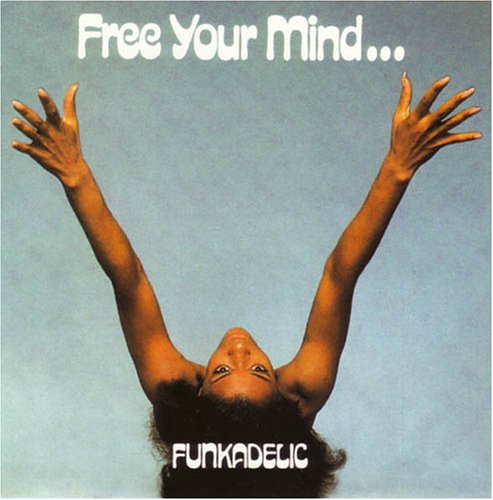
Free Your Mind... and Your Ass Will Follow. Funkadelic.


“My Cadillac and My Pinkie Ring: a Diagnoses of The Rapture of Objects in The Form of a Funkadelic Review By Ralph Dorey on Friday 13th of January 2012 in Holloway”


The Funk is physical, of this we can have no doubt. We hold this truth to be self evident, as to say “beyond representation”. The Kingdom of Heaven is Within. We need only look at the Funk to encounter its corporeal being, it requires trust and not the writing of a church.

Side One: Cock Block

“what time is this?” – George Clinton

Let us look at the body of Funk as wheeled in on the gurney. Dead on arrival but twitching (because to be truly physical, to loose one’s head and become animal, one must also become meat. To free one’s mind one must loose one’s head. The Funk is a corpse of transcendence, if the soul were to move not up to heaven but down to the crotch, down to the earth and death sex of soil-systems). The title track opens this monster, opens with the dying rays of Hendrix’s unification of church and state through the banner of stars and delivers a survey of land flattened (Holy Compression), describing space through the pan from left and right and left and right. Upon the flat landscape Funkadelic build a pyramid from a thousand parts. Thousands of pieces, thousands of instances, but only a handful of types, the [it ain’t a stab it’s a slab] of bass, organ and drum chopped tight with the (all men are) equaliser and staccato like a brick or a bar of pig lead. The funk is a flat square, existing only in two dimensions. Tight. Distortion is the sound of restraint, the head against the ceiling just as Funk is the music of repression, the repression of the self, of the head, just the body in the world (buried alive). A wriggle against the belt, the hand against the mountain, the impossibility of breaching the bounds made into a sublime act like an abstract fuck. Over and over and always now on the Plateau. Like a piston, Up For The Down Stroke.

There is no time in this song, no progression. A short while later Public Enemy would push this architecture beyond its last grasp at spacial orthodoxy. The Bomb Squad build samples like sedimentary rock free from human intervention and transcription. All time and space is now and in every moment, understanding that both history and architecture are perfected in the formation of coal (the black planet). Layers and layers pile down on now, hit all the buttons and hit record and repeat till the full black stratified mass fills all space and time. My Uzi weighs a ton.

Side Two: Science Fiction

“head ache in my heart, heart ache in my head” – Eddie Hazel

The doctor leans over us, the dead and headless and strokes us with his words of comfort and the placebo of muzak. Drifting off we find we’re in the yard behind the church and down by the riverside. Sitting and leaning against a washed out marker. Shoulders to the stone we remark at how its shape now matches that of our torso and likewise the empty space above mirrors the absence of our own skull. The gravestone is too short though, to keep our back flat to it we should sit lower, out seat touching the submerged root of flat stone which carries down beneath the surface and supports the vertical weight above. Reaching up the doctor pulls on the hanging branches of Willow and Yew. The church tree and the river tree, the painkiller and the heart medicine. 

Post-op: Freed of legs and stump-sunk to the belt we awake. Spine aligned to the stone and groin in the soil. A nothing above the nothing below and a horizon in between with a torso plugging the sky to the earth. Nearby the Willow sways a million repeated arcs of whale finger bones over the water like the infinite delay of the echo box through which pumps the snare. Repetition is to have one time at all times stacked up. The Yew just bends, denying the stability of form with a stretch while it in turn is denied the release of a break by layers of compression.

“from every head and ass” – George Clinton


Cross posted on The Institute for Spectralogical Audio Research

Saturday, 14 January 2012

The Lost Ark

Almost forgotten now, one of the great public events of the 1970's in Britain was the scrapping of the aircraft carrier HMS Ark Royal, which seemed to cast a shadow over the national consciousness like a Moloch through the middle of the decade. At the time it felt far more historically significant than the comparatively trivial Silver Jubilee, as, being the Royal Navy's last proper capital ship, its demise was considered to mark the last line on the page of the British Empire.

The scrapping of the vessel was in political terms hugely controversial, with the Admiralty conducting a clandestine war with Harold Wilson's government through the press in order to keep the vessel in service. In the end though, aircraft carriers are enormous indulgences, and the cost for an essentially clapped-out former power like Britain was excessively high, regardless of the "prestige", always so important to Britain's ruling class, that the ship brought. Nevertheless, the loss of Ark Royal felt like another defeat, another colony lost, another nationalised industry given over to uncontrollable unrest. Most people of the era considered the ship to be, like the Titanic, a metaphor in waiting - one day, if people remembered anything about that decade, it would be the one where the UK finally entered the breaker's yard.

Public sympathy for the fate of Ark Royal was stoked up constantly on news bulletins and even childrens' shows like "Blue Peter", where the twists and turns in the story, with rumours of a reprieve stoked up and then dashed by the Ministry Of Defence, were documented breathlessly. The BBC made a hugely popular documentary, "Sailor" which followed the ship's last operational cruise. The clip below is well worth watching, as it's beautifully shot, and gives a sense of the almost psychedelic, mind-bending aura that can surround the military - all that technology, discipline and organisation that descends into chaos, confusion and destruction the moment it goes into action; a kind of reverse alchemy that turns gold into dross.


That said, Ark Royal was never the ship that the public imagined it to be. Like all the post-war British aircraft carriers, it had been originally designed to carry wartime piston-engined fighters, and struggled through a seemingly endless series of refits in order to fly off supersonic jets, for which it was simply too small to adequately cope with. You can see from the clip the high angle of attack that the jets had to adopt on take-off, before the high-powered steam catapults literally threw them off the deck. The American-built Phantom fighters had to be completely re-engined with higher-thrust Rolls Royce units in order to prevent them dropping straight into the sea. The loss rates on post-war British carriers were generally appalling, especially with the Royal Navy's perverse inclination towards huge, complex aircraft like the forgotten Supermarine Scimitar, which would have taxed even the massive American supercarriers.

If the received wisdom of the time, that Britain was finally retiring from the world stage, was proved wrong, it was because there was another nation, on the other side of the world, that was taking just as keen an interest in the fate of the pride of the Royal Navy. The Junta of Generals in Argentina calculated that the scrapping of Ark Royal marked the moment of decline when Britain would no longer be prepared to defend its remaining far-flung and isolated dominions. The resulting war, and surprise British victory, would re-ignite the dying embers of Britain's imperial zeal, with baleful consequences over the next three decades. Ark Royal had turned out not to be a talisman after all, but just another ship.

Friday, 13 January 2012


In the Garden


The enormously expanded and integrated mediascape of the Eighties and Nineties is strung out across an increased number of nodes through the growing accessibility of portable TVs. The reduced cost of owning a TV set, the possibility of having several distributed throughout the household, always on in the background, also helps to warm up the TV, to make it a tepid medium at least, a part of the furniture, attended to fitfully, increasingly a component of consciousness itself, a prosthesis, a plug-in, whose ubiquity and multiform extension as a provider of products and entertainment slowly integrate itself into the fabric of daily life such that it is neutralized, naturalized. You turn on the TV and have it as background while you do something else, it’s a comforting presence, without the image flickering away there, without the sound, things feel wrong, something is missing. This is probably the process all “magical” technologies go through, from centralized, big-and-bulky focus of astonishment to integrated, invisible under-girding of daily life.


TVs’ full meshing into the collective psyche and the political uses and implications of this process are the central concern of Hal Ashby’s Being There. The film is an adaption of Jerzy Kosinski's last novel, of the same name. Kosinski is himself a rather mysterious, quixotic character, an escapee from Communism who married into money in the US and wrote a series of repetitive, staccato and frequently brilliant novels in the Sixties and Seventies. Controversy of all kinds followed Kosinski around and there are questions both whether he plagiarized his story from a famous prewar Polish work and whether he deserved full screenwriting credits for the final draft that made the film. But these are incidental considerations, there’s little doubt that the vision of a simple-minded gardener who understands the world only through TV and whose observations chime in with the naturalistic fallacies of American capital is highly prescient. That Chauncey is a kind of middle-aged holy innocent, lost in a semi-senile stupor in which he can not discriminate between fantasy and reality, who literally thinks and speaks TV, beautifully anticipates Reagen’s imminent Presidency.


Being There’s vision, echoing that of Network, is of the new set of relations brought about by the merging of the garden and the network, and the magical capacity that is conferred on those who have never known otherwise, in a sense Chauncey is an earlier and older version of the “digital native”, and his advantage to the elderly and declining elite scions who adopt him is his age, he is middle-aged, pliable, well-mannered, bland, talks in optimistic generalities, psychically he represents an epistemic break from the old guard, his is a new and thoroughly modern consciousness fully shaped by the most powerful medium yet devised. He literallly thinks and talks TV, yet he also has a deep appreciation of nature. This confluence between the ecologically minded and the business-minded also informs much of the alternative-culture of the Seventies, and informs another of its key films, Stay Hungry.


Being There’s mise-en-scene is appropriately wintery and subdued, it begins and ends with death, the death of the Old Man that orphans Chauncey and the death of his benefactor that allows for his possible ascension to the Presidency, and it also turned out to be Peter Sellers’ last role. Chauncey offers comforting homilies on the possibility of rebirth, a new Spring, an injection of youthful vigour and vitality, the sudden surge in potency that will be granted by deregulation and the post-Sixties entrepreneurs entering the scene. It is this sense of the Seventies as a terminal point, a generational dying-off and deregulation as a necessary pruning-back, a laying to rest of the sclerotic Fordist compact that will usher in green shoots and infuse the system with young blood that Chauncey speaks to. This is what allows the elderly Reagen to affirm a New Morning in America in his re-election campaign in 84 ( and which would allow Tony Blair to assert a decade later that England is a “young country”).


Chauncey isn’t exactly a parody of Reagen but of a whole tendency toward the idea of the natural man, whose power is precisely his uncluttered, uninflected apprehension of direct truths that the more sophisticated can never attain, dogged as they are by psychological and existential problems, their optimism ruined by experience. This lionization of the homespun, the good plain sense of a true American spirit uncorrupted by doubt and fancy European book-learning will reach its peak/nadir with Forest Gump. TV is the soul of America made visible and Chauncey is its word made flesh. This is why in the final sequence as the Elders discuss his candidature for president we see him guilelessly walk on water, he is superhuman, a redeemer, has a direct unmediated access to the Oversoul, incarnates it. Diana in Network may be “TV incarnate” for Chayefsky (indifferent to suffering and love alike, the phallic witch of the coldest of all cold mediums) but Chauncey incarnates TV as salvation, and what he will save is Capitalism.


In Network, Jensen’s speech is partly just Chayefsky flexing his stylistic muscles but there is a congruence between Jensens’ style and the emerging business-speak that is soon to inflate into the Gnostic professional rhetoric of the MBA. His speech, in borrowing ecological and environmental metaphors, helps to posit a humane capitalist teleology that then gains immense traction after the collapse of the Soviet Union in 1989 and informs the Third Way of Blairism and the Clintonite ethos of the 90s. Jensen’s “system of systems” is a new form of sublimity, a global vision of capital that supplants the natural world. In this way the rhetoric of capital steals something from the Romantics, this is both a more aggressive assertion of “ capitalist realism” and also a more benign vision, capital itself is the sheltering mother, the pathetic fallacy gone free-market, Chauncey is its avatar.